

Introduction
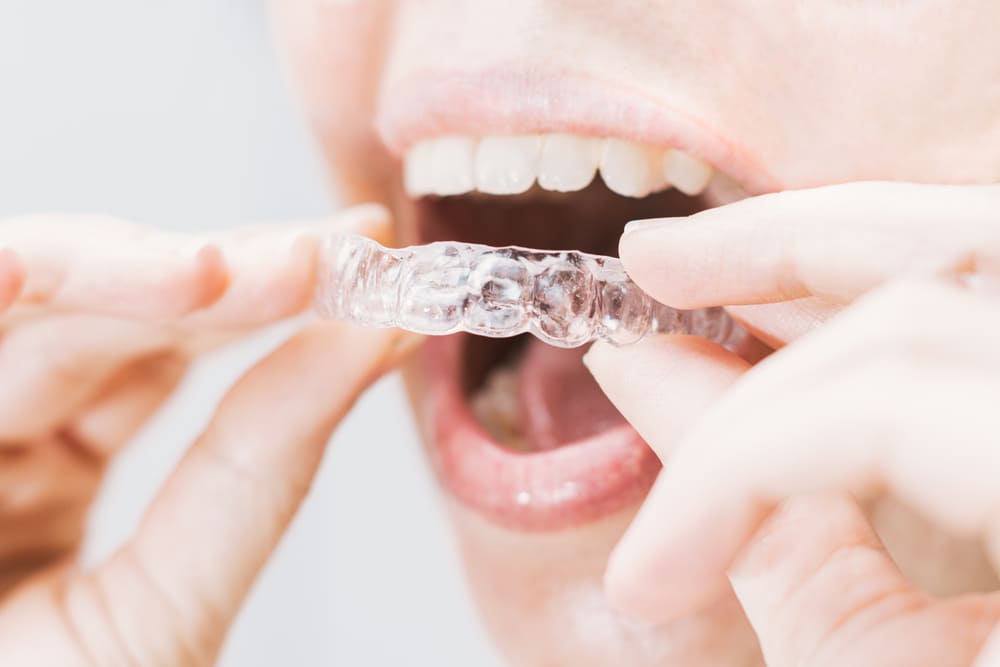
Suppose your orthodontist used a 3D model of your mouth to create an individualized treatment strategy for you, based on digital images of your teeth. You will get your first brackets for Invisalign and formally start your smiling adventure once the Invisalign lab produces your transparent aligners according to your personalized treatment schedule. Here are some things you should know about what happens during the first week after your treatment.
Experiencing mild discomfort
The positive aspect is that you won’t experience any severe pain in your mouth during the first week after your treatment. However, when you get the initial set of aligners and sometimes when you transfer to a new bracket, you might experience some mild pain or discomfort. While many patients are concerned about Invisalign cost it’s also important to understand that this discomfort is a normal part of the process. This is a result of the constant, mild force your aligners are applying to realign your teeth. Keep using your aligners. It is easy to stop using the aligners if they hurt, but discomfort gets better the longer you use them.
Tightness of Invisalign
Every Invisalign set is made for carrying out particular tooth motions. The aligners will feel extremely tight when you insert your first Invisalign tray and, frequently, while switching to a fresh set. The aligners will begin to slip up as you use them and when your teeth move. You must make use of your Invisalign chewies, also known as bite sticks, for ten to fifteen minutes each day to strengthen the way the aligners fit your teeth. For the perfect Invisalign alignment, this will stretch the aligners against your teeth.
Talking issues
You need a while to become used to having the aligners in your mouth. During the first week, several patients discover they have a stutter. Talking as frequently as you can is your greatest option. Sing songs, read loudly, or have a phone conversation with anyone. Your words will go back to normal if you become a talker for a few days. This will make you adjust to your aligners sooner.
Less eating
You will remove your aligners to eat, drink anything other than water, and brush or floss. You will then replace your aligners to achieve the suggested 22 hours of everyday usage. You become much more conscious of how frequently you eat or drink during the day since you have to take your aligners in and out. Many patients are initially taken aback by this and discover that they eat fewer snacks while undergoing this procedure.
Cleaning the aligners
Saliva and plaque will accumulate on your aligners as you use them every day. Wipe them before going to bed at night and in the mornings so you can keep them neat and odorless. It is also an excellent practice to wash them before placing them back into your mouth. Invisalign cleaning crystals and other things are available for sale to clean these aligners. However, brushing your aligners with a toothbrush with soft bristles and then rinsing them in warm water is the simplest method.