

A chipped tooth can happen unexpectedly. It might be the result of biting into something hard, a minor accident, or gradual wear over time. While some chips are barely noticeable, others can affect both the appearance and strength of a tooth.
The good news is that dentists in Cambridge have several reliable ways to restore chipped teeth. The right approach depends on how much of the tooth is damaged, where it is located, and your long-term goals for both function and appearance.
Understanding the differences between bonding, veneers, and crowns can help you make a more informed decision.
Why Chipped Teeth Should Not Be Ignored
Even a small chip can create rough edges or weaken the tooth structure. Over time, this may lead to increased wear, sensitivity, or further damage.
In some cases, what appears to be a minor cosmetic issue may involve deeper layers of the tooth. That is why a professional evaluation is important before choosing a treatment.
Dental Bonding for Minor Chips
Dental bonding is often the first option considered for small chips.
In this procedure, a tooth-coloured resin is applied directly to the affected area. The material is shaped to restore the natural contour of the tooth and then hardened using a special light.
Bonding is typically recommended when:
- The chip is small
- The tooth structure remains strong
- The goal is a quick cosmetic improvement
Because bonding requires minimal preparation, it is considered a conservative approach. In many cases, it can be completed in a single visit.
For patients with minor damage, bonding provides a straightforward way to restore appearance without altering much of the natural tooth.
Veneers for Front Tooth Restoration
When a chip is more noticeable or affects the front surface of the tooth, veneers may be recommended.
Veneers are thin, custom-made shells that are bonded to the front of the tooth. They are designed to improve both shape and color while covering the damaged area.
This option is often considered when:
- The chip is larger or more visible
- There are additional cosmetic concerns, such as discoloration
- Multiple front teeth need improvement
Patients exploring porcelain veneer often do so when they want a more uniform and long-lasting cosmetic result.
Because veneers cover the visible surface, they can provide a more comprehensive enhancement compared to bonding.
Crowns for More Extensive Damage
If a tooth has significant damage or structural weakness, a crown may be the most appropriate solution.
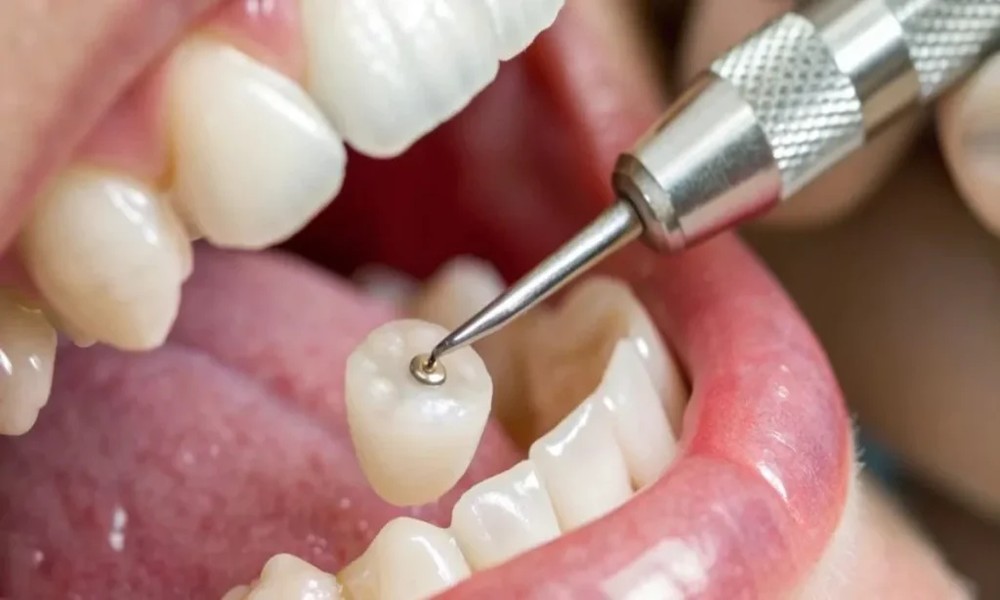
A crown covers the entire visible portion of the tooth, restoring both strength and function. This makes it a suitable option when a chip extends deeper into the tooth or when the remaining structure needs reinforcement.
Crowns are typically recommended when:
- A large portion of the tooth is damaged
- The tooth has undergone prior treatment
- Additional support is needed for long-term function
In these situations, a dentist may recommend crown treatment for damaged teeth to help protect the tooth from further complications.
Choosing Between Bonding, Veneers, and Crowns
The right treatment depends on several factors:
- The size and location of the chip
- The strength of the remaining tooth structure
- Your cosmetic goals
- Your long-term expectations
For example, a small edge chip on a front tooth may only require bonding, while a larger fracture may benefit from a veneer or crown.
In many cases, the decision is not just about repairing the chip, but also about maintaining long-term tooth stability.
What to Expect During Treatment
Each treatment option involves a slightly different process:
- Bonding is usually completed in one visit with minimal preparation
- Veneers typically require two visits for design and placement
- Crowns involve reshaping the tooth and placing a custom restoration
Your dentist will explain each step and help you understand what to expect based on your specific situation.
Maintaining Your Restored Tooth
After treatment, maintaining good oral hygiene is essential.
Simple habits can help protect your restoration:
- Brushing twice daily
- Flossing regularly
- Avoiding biting hard objects
- Attending routine dental visits
If you grind your teeth, a nightguard may also be recommended to reduce pressure on restored teeth.
FAQs About Restoring Chipped Teeth
Can a chipped tooth heal on its own?
No, enamel does not regenerate. Once a tooth is chipped, it requires treatment to restore its shape and function.
Is dental bonding permanent?
Bonding is durable but may require maintenance over time, especially if exposed to frequent pressure or staining.
How do I know if I need a veneer or a crown?
The decision depends on the extent of the damage. Veneers are often used for surface-level improvements, while crowns provide full coverage for more extensive damage.
Are veneers only for cosmetic purposes?
Veneers are primarily used to improve appearance, but they also help protect the front surface of the tooth.
How long do crowns last?
With proper care, crowns can last many years. Longevity depends on oral hygiene and daily habits.
Is restoring a chipped tooth painful?
Most treatments are comfortable and performed with minimal discomfort. Your dentist will ensure the procedure is appropriate for your needs.
Restoring Your Smile with the Right Approach
Chipped teeth can be repaired using several effective methods, each designed to match the level of damage and your goals for appearance and function.
Whether the solution is bonding, veneers, or a crown, early evaluation helps prevent further complications and ensures the best outcome.
If you have a chipped tooth and are unsure which treatment is right for you, Cambridge Centre Dental Care can help you explore options that restore both function and appearance in a way that fits your needs.