

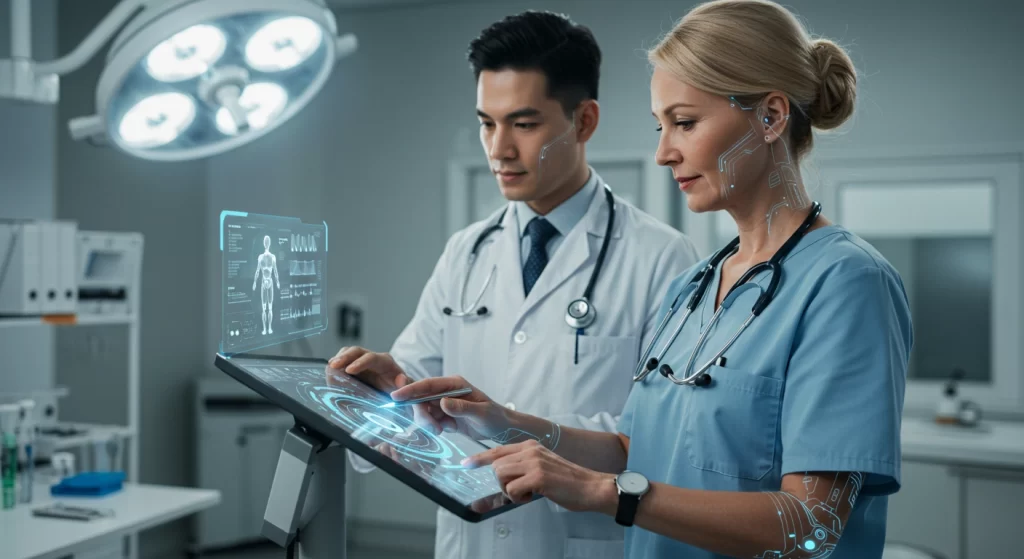
Healthcare professionals are under more pressure than ever before. Between patient consultations, administrative responsibilities, insurance requirements, and electronic health record management, providers often spend nearly as much time documenting care as they do delivering it. This growing burden has created a strong demand for smarter digital solutions, and one of the most impactful innovations is the rise of the AI medical scribe.
Artificial intelligence is rapidly changing healthcare operations by helping providers automate clinical documentation. Instead of manually typing notes during or after patient visits, physicians can now rely on intelligent systems that capture conversations, organize medical information, and generate professional records automatically. This shift is helping clinics improve efficiency while creating a better experience for both patients and providers.
The Administrative Burden in Healthcare
Documentation is a necessary part of healthcare, but it has also become one of the largest obstacles to productivity. Many physicians spend hours every day updating charts and completing paperwork. In some cases, providers continue documentation late into the evening after seeing patients throughout the day.
The problem is not simply time consumption. Excessive charting can also reduce eye contact with patients, interrupt communication, and increase stress among healthcare teams. This has led many organizations to search for more advanced healthcare charting software that can simplify workflows without compromising accuracy or compliance.
As patient volumes continue to grow, traditional documentation methods are becoming increasingly difficult to sustain.
How AI Powered Medical Scribe Systems Work
An AI powered medical scribe uses advanced voice recognition and natural language processing to understand conversations between providers and patients. The system listens in real time, identifies clinically relevant details, and converts the discussion into structured medical documentation.
These platforms are designed to recognize medical terminology, treatment plans, medications, symptoms, diagnoses, and follow-up instructions. The generated notes can then be reviewed and approved by the healthcare provider before being added to the patient record.
Common Documents Created by Medical Scribe Software
- SOAP notes
- Consultation summaries
- Follow-up documentation
- Referral letters
- Procedure notes
- Patient histories
This automation significantly reduces manual typing and repetitive administrative tasks.
Why AI Medical Scribing Is Growing So Quickly
The healthcare industry is increasingly adopting ai medical scribing because it addresses several major operational challenges at once.
Increased Efficiency
Doctors and clinicians can complete documentation faster while focusing more attention on patient care. This improves workflow speed and allows practices to operate more efficiently.
Better Patient Interaction
When providers are not distracted by typing or navigating electronic records, patient conversations become more natural and engaging. This can strengthen trust and improve the patient experience.
Reduced Burnout
Physician burnout has become a serious issue across healthcare systems worldwide. Administrative overload is one of the primary causes. AI-assisted documentation helps reduce after-hours charting and mental fatigue.
Improved Documentation Quality
AI systems are capable of producing consistent and structured clinical notes. This improves record organization and helps maintain documentation standards across healthcare teams.
Financial Benefits
Accurate documentation supports cleaner coding and billing processes. Better records can help reduce claim denials and improve reimbursement efficiency.
The Evolution of Healthcare Charting Software
Older documentation tools often relied heavily on manual dictation and templates. While these systems improved digital recordkeeping, they still required substantial physician involvement.
Today’s healthcare charting software goes much further. AI-powered platforms can understand context, identify important details automatically, and adapt to different specialties and workflows.
How Modern AI Systems Adapt to Different Specialties
For example:
- A cardiology clinic may require detailed medication tracking and cardiovascular assessments
- A dermatology practice may prioritize visual observations and procedural notes
- Primary care providers may focus on preventive care and long-term patient histories
Modern AI systems can adapt to these unique documentation requirements.
The integration of artificial intelligence is making clinical documentation smarter, more responsive, and increasingly accurate.
AI Medical Scribe Solutions for Different Healthcare Environments
An AI medical scribe can provide value across many healthcare settings.
Hospitals
Large healthcare systems benefit from faster documentation workflows and improved coordination between departments.
Private Practices
Smaller clinics can reduce administrative strain without needing additional support staff.
Telehealth Services
Remote consultations are especially well suited for AI-assisted charting because conversations already occur through digital platforms.
Specialty Clinics
Specialized providers often deal with highly detailed documentation requirements that AI systems can help streamline.
Urgent Care Centers
Fast-paced environments benefit from rapid note generation and more efficient patient processing.
The Importance of Security and Compliance
Because medical information is highly sensitive, security remains a critical factor when choosing medical scribe software. Healthcare providers must ensure that AI systems meet strict privacy and compliance requirements.
Important Security Features
- HIPAA compliance
- Secure data encryption
- Controlled access permissions
- Audit trails
- Protected cloud infrastructure
Trustworthy AI documentation tools are designed with patient privacy as a top priority.
The Future of AI in Clinical Documentation
Artificial intelligence will continue to reshape the healthcare industry in the coming years. The next generation of ai medical scribing technology is expected to include even more advanced features.
Future Innovations in AI Medical Scribing
- Real-time clinical recommendations
- Automated coding assistance
- Predictive healthcare insights
- Multi-language support
- Personalized workflow optimization
As adoption grows, AI-powered documentation may become a standard part of healthcare operations worldwide.
Providers are increasingly recognizing that intelligent automation is not about replacing human care. Instead, it is about reducing repetitive administrative tasks so clinicians can spend more time where they are needed most — with patients.
Conclusion
The future of healthcare will likely combine advanced technology with more personalized care experiences, and the AI powered medical scribe is becoming one of the key tools driving that transformation.
By reducing administrative burdens, improving documentation accuracy, supporting better patient interactions, and streamlining workflows, AI-powered medical scribing is helping healthcare organizations operate more efficiently in an increasingly demanding environment.
As technology continues evolving, healthcare providers that embrace intelligent documentation solutions will be better positioned to deliver higher-quality care while improving both operational performance and provider well-being.